
India's foreign exchange reserves have surged to an all-time high, reaching USD 728.494 billion, according to the Reserve Bank of India. This increase is attributed to a rise in foreign currency assets and gold reserves.

rediffGURU Nayagam PP, career counsellor and founder of EduJob360 explains why cracking the UPSC exam is a dream for lakhs of young Indians.
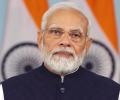
Prime Minister Narendra Modi on Friday expressed hope that G20 will draw inspiration from the vibrancy of the Indian economy and work towards bringing back stability, confidence and growth on the global landscape.

'After the Galwan clash, the rules of engagement changed with the army commanders allowed to use any means at their disposal as they deem fit for tactical operations.'

Purnendu Maji and Srinivas Bhogle present Rediff's Most Valuable Player Index of IPL 2026 after the league stage.

Male graduates applying for private sector jobs in India are far more likely to progress to the next round if they have high-caste Hindu names than if they have surnames associated with dalit (formerly untouchable) or Muslim origins.

India's first trillion-dollar company will be built on technology it owns, not just operates, predicts Ajay Kumar.

Australian High Commissioner to India Philip Green has praised Jasprit Bumrah, calling him the best bowler in the world.

MNS president Raj Thackeray questions the fuel consumption during recent election campaigns, asking if austerity measures are only meant for the common people.

Difficulties in containing the virus, an anaemic policy response, and underlying vulnerabilities, especially across the financial sector, are leading us to expect growth to fall by 5 per cent this fiscal year before rebounding in 2021, S&P said in a report.
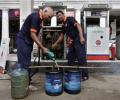
A Monaco-based fuel technology company, FOWE Eco Solutions, claims its patented Cavitech fuel emulsion technology can help industries slash fuel consumption, reduce emissions, and improve equipment performance by using water in fuel.

Indian benchmark indices, Sensex and Nifty, rallied significantly following a sharp decline in crude oil prices. This decline was triggered by US President Donald Trump's announcement of progress in negotiations with Iran towards a peace agreement, which led to renewed optimism in global markets.

'It was diminishing even before Trump came to power.' 'The US was at the centre of the global economy. That position is going to become less and less important and less central.'

'No finance minister has the capacity to put the economy in an ICCU just like no finance minister has the capacity to take it for 10% growth!'

Union Minister Ashwini Vaishnaw highlights the growing demand for AI-related jobs in India and the transformation needed in the IT industry. He also mentions significant investments in data centres and subsea cable networks to boost digital infrastructure.

The rupee recovered to 95.18 against the US dollar after hitting an all-time intra-day low of 95.44. The recovery was supported by possible RBI intervention amid renewed Gulf tensions and rising crude oil prices.

The Indian government has increased import duties on gold and silver from 6 per cent to 15 per cent to curb inbound shipments of precious metals amid a rising import bill due to the West Asia crisis.

Mukesh Ambani announced a 10 lakh crore investment by Reliance Industries to revolutionize artificial intelligence in India, focusing on building sovereign compute infrastructure and making AI accessible and affordable for all.
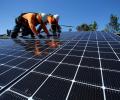
The United States has announced a preliminary countervailing duty of 125.87 per cent on imports of certain Indian solar goods, alleging unfair subsidisation. This move could impact India's renewable energy sector and its efforts to boost domestic solar manufacturing.

Punjab Kings co-owner Preity Zinta urged media to avoid spreading unverified information. while defending her team after they suffered a fourth straight defeat IPL 2026, mounting pressure in the playoff race.
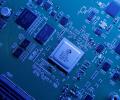
Union Minister Ashwini Vaishnaw announced that two more semiconductor chip packaging units, part of the India Semiconductor Mission, are expected to be operational by July and December, respectively. He also highlighted India's focus on becoming a beneficiary of AI technology, expanding data centre infrastructure with significant investments, and developing new subsea cable networks for global connectivity.

Is Bhutan merely experimenting with digital finance -- or is the Himalayan kingdom punching far above its weight, quietly playing one of the most sophisticated strategic games in Asia today? asks Varun Arya.
Indian economy is rebounding strongly providing a golden opportunity to tackle fiscal challenges decisively but steady rise in debt of the central and state governments could constrain the growth, according to a new International Monetary Fund report

'What we are seeing today is India stepping into its digital confidence, not as a follower but a leader.'

Despite a 21 per cent minimum wage hike in parts of Uttar Pradesh, factory workers in India, particularly in states like Uttar Pradesh and Haryana, continue to experience wages below the national average and a widening disparity compared to supervisors and managers.

'The pressure and responsibility of captaincy is slowly making us lose Rishabh Pant, the batter.'

India is one of the few nations, and perhaps the only nation, that has good relations with America, Israel and Iran. Knowing that a war in the Gulf would damage our economy, hurt supply of fertilisers and fuel, and cause general chaos, we should have tried to ensure this war did not begin, asserts Aakar Patel.

Reserve Bank of India Governor Shaktikanta Das on Friday said the country's economy is an island of stability despite two Black Swan events and multiple shocks. "In an ocean of high turbulence and uncertainty, Indian economy is an island of macroeconomic and financial stability," Das told reporters during the post policy press conference. He said the financial stability, macroeconomic stability and resilience of growth is being witnessed despite two Black Swan events happening one after the other and multiple shocks.
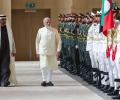
Prime Minister Narendra Modi has offered India's support to bring peace to West Asia during talks with UAE President Sheikh Mohamed bin Zayed Al Nahyan. Both countries signed agreements to strengthen strategic collaborations in energy and defence.

Iranian Foreign Minister Abbas Araghchi is in India for a BRICS foreign ministers' meeting, where discussions will focus on the escalating crisis in West Asia and its impact on global energy supply chains.

NITI Aayog Member Rajiv Gauba has detailed an extensive deregulation agenda, moving India towards a 'permitted unless prohibited' principle to dismantle new forms of the Licence Raj and clear 'regulatory cholesterol' for businesses.

The measures announced by it risk backfiring, disrupting the foreign exchange market, and intensifying the very pressures they seek to contain, with broader consequences for the economy points out Rajeswari Sengupta.

Jasprit Bumrah becomes 8th Indian to complete 500 international wickets

Explore the reasons behind Jasprit Bumrah's unexpected struggles in IPL 2026, analysing his past performances and the factors contributing to his current disappointing streak.

Indian stock markets are poised for volatility this week, driven primarily by the outcomes of five state assembly elections, ongoing high crude oil prices amid West Asia tensions, and the release of Q4 corporate earnings, according to market analysts.
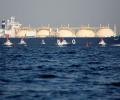
Iranian Deputy Foreign Minister Kazem Gharibabadi has urged India to take the lead in bringing peace to West Asia, highlighting the UAE's role in stalling BRICS consensus on the conflict. Gharibabadi also discussed a new framework with Oman for merchant vessels passing through the Strait of Hormuz.

Chennai Super Kings suffered a damaging defeat to Lucknow Super Giants as Mitchell Marsh, Nicholas Pooran and Akash Singh exposed tactical flaws and pushed CSK to the brink of IPL 2026 playoff elimination.

Five-time champions Chennai Super Kings were eliminated from the race for the IPL 2026 playoffs after suffering a humiliating 89-run defeat at the hands of Gujarat Titans in Ahmedabad on Thursday.
